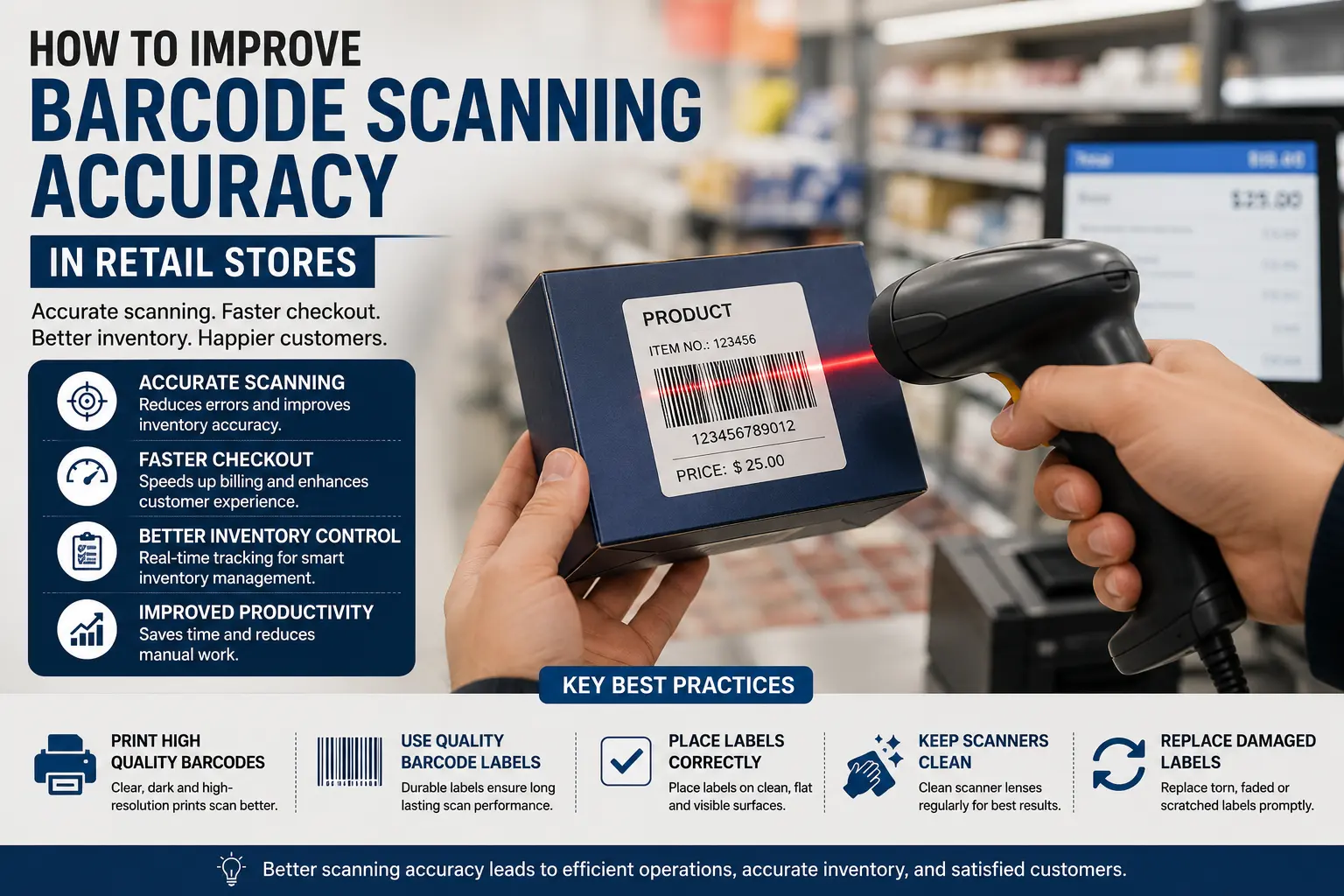
Accurate barcode scanning is essential for modern retail businesses. Whether processing sales, managing inventory, or restocking shelves, barcode scanners help improve efficiency and reduce manual errors. However, damaged labels, poor printing, incorrect label placement, or poorly maintained scanners can reduce scanning accuracy and slow down daily operations.
By following a few best practices, retail stores can significantly improve barcode scanning performance while ensuring faster checkout and more accurate inventory management.
Why Barcode Scanning Accuracy Matters
Barcode scanning accuracy directly affects retail operations.
Accurate scanning helps businesses:
- Speed up checkout
- Reduce pricing errors
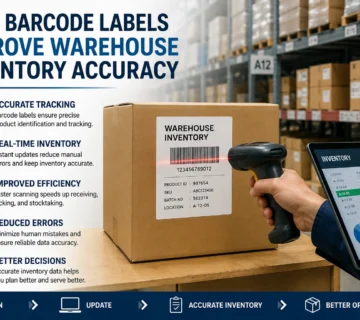
- Improve inventory accuracy
- Enhance customer experience
- Reduce employee workload
Even small scanning errors can create inventory discrepancies and increase operational costs.
Common Causes of Poor Barcode Scanning
Damaged Barcode Labels
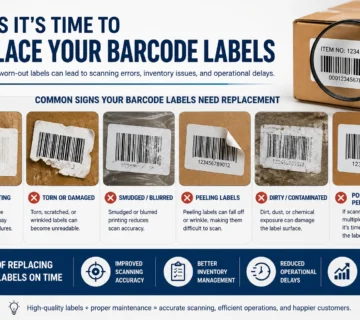
Wrinkled, torn, or faded labels often fail to scan correctly.
Low Print Quality
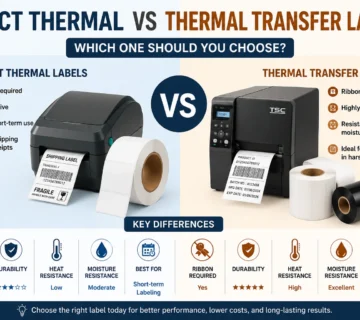
Poor printing produces unclear barcodes that scanners struggle to read. Proper label printing techniques help produce sharp barcodes that are easy to scan and improve retail efficiency.
Incorrect Label Placement
Labels placed over folds, curves, or uneven surfaces reduce scan success.
Dirty Scanner Lens
Dust and dirt on the scanner window affect reading performance.
Low-Quality Barcode Labels
Inferior label materials fade quickly and reduce scanning reliability.
How to Improve Barcode Scanning Accuracy
Use High-Quality Barcode Labels
Durable barcode labels produce clearer barcodes and remain readable for longer periods. Using premium barcode labels helps produce clear, durable barcodes that scan accurately in busy retail environments.
Print High-Resolution Barcodes
Higher print quality improves scanner readability.
Place Labels Correctly
Always place labels on clean, flat, and visible surfaces.
Keep Barcode Scanners Clean
Regularly clean scanner lenses using manufacturer-recommended methods.
Replace Damaged Labels
Replace labels immediately if they become faded, scratched, or difficult to scan.
Best Practices for Retail Stores
Retail businesses should:
- Inspect labels regularly
- Train staff on proper scanning techniques
- Maintain barcode scanners
- Use quality printing materials
- Test barcode readability before product deployment
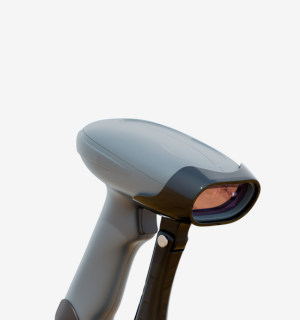
Choosing the right barcode scanner is equally important for achieving fast and reliable barcode reading.
Benefits of Accurate Barcode Scanning
Faster Checkout
Customers spend less time waiting.
Better Inventory Management
Stock records remain accurate.
Reduced Human Errors
Automated scanning eliminates manual entry mistakes.
Higher Productivity
Employees complete inventory tasks more efficiently.
Industries That Benefit
Barcode scanning accuracy is important in:
- Retail stores
- Supermarkets
- Warehouses
- Pharmacies
- Logistics
- Distribution centers
Frequently Asked Questions
Q1. Why is my barcode scanner not reading labels?
Ans – Damaged labels, poor print quality, dirty scanner lenses, or incorrect label placement are common causes.
Q2. How can I improve barcode scanning accuracy?
Ans – Use high-quality barcode labels, print clear barcodes, maintain scanners, and replace damaged labels when needed.
Q3. Does label quality affect barcode scanning?
Ans – Yes. Premium barcode labels improve print clarity and scanning reliability.
Q4. How often should barcode scanners be cleaned?
Ans – Retail stores should clean barcode scanners regularly according to the manufacturer’s maintenance guidelines.
Q5. Why do some barcodes scan better than others?
Ans – Barcode size, print quality, label material, and placement all affect scanning performance.
Conclusion
Improving barcode scanning accuracy helps retail stores reduce errors, improve inventory management, and deliver faster customer service. By using quality barcode labels, maintaining barcode scanners, and following proper labeling practices, businesses can achieve more reliable scanning performance and greater operational efficiency.