Nobody thinks about receipt paper until it goes wrong. The printer jams with a queue at the till. A customer comes back with a warranty claim and a receipt that’s gone blank. A box of “80 x 80” rolls runs out much faster than the last one. Thermal rolls are among the cheapest things a shop buys, and buying them badly costs more than it looks.
This guide covers what separates good thermal rolls from bad ones, which size fits which printer, and how to store rolls in UAE conditions so receipts stay readable.
What thermal rolls are
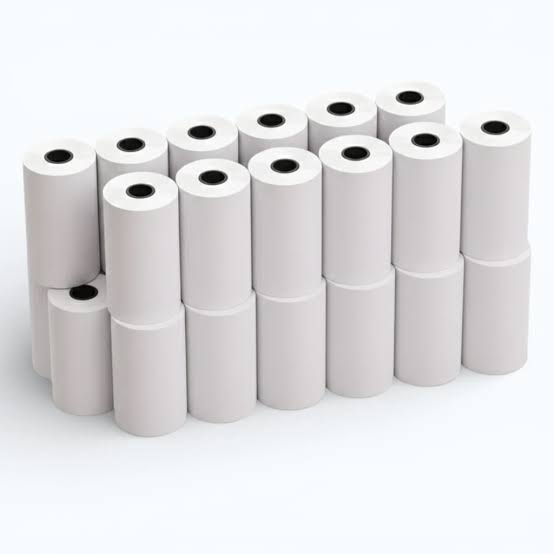
Thermal rolls are rolls of heat-sensitive paper used in receipt printers, card payment terminals, POS systems, kitchen printers and queue ticket machines. The paper has a coating that turns dark where the printer’s heated printhead touches it, so the printer needs no ink, toner or ribbon. That’s why receipt printers are cheap to run, and why the paper matters so much: the paper is doing the printing.
What poor-quality rolls cost a shop
Faded and blank receipts
A weak coating gives grey, patchy print from the first receipt, and the image fades faster. Customers keep receipts for returns and warranty claims, and a receipt that can’t be read after a few months turns into an argument at the counter.
Jams at the till
Rolls that are wound unevenly, too thick for the printer or on a damaged core jam more often. Every jam is a stopped till and a longer queue.
Printhead wear
Low-grade coatings can leave more residue and wear the printhead faster. Printer makers publish lists of paper grades approved for each model, and a printhead costs far more than a carton of good rolls. If your printer is already giving trouble, our guide to common thermal roll problems covers the fixes.
Rolls with less paper on them
A roll’s size gives its width and outside diameter, not the length of paper on it. Two “80 x 80” rolls can hold very different lengths, depending on the paper thickness, how tightly it’s wound and the size of the core. A roll with less paper costs more per receipt and gets changed more often. Compare the metres printed on the box, not the number of rolls.
Thermal roll sizes: which one fits your printer
Roll sizes are written as width x diameter in millimetres, so an 80 x 80 roll is 80 mm wide and 80 mm across.
| Paper width | Common roll sizes | Used in |
| 80 mm | 80 x 80 mm | Standard POS receipt printers such as the Epson TM-T88 and Star TSP100 series |
| 57 or 58 mm (listings use both for the same width) | 57 x 40 mm, 57 x 50 mm | Card payment terminals, handheld and mobile printers, compact receipt printers |
Before you order, check three things in your printer’s manual: the paper width, the largest roll diameter the compartment takes, and the core size. Some 80 mm printers can take 58 mm paper with a width guide fitted and a setting changed, but don’t assume yours can.
Paper weight is measured in gsm (grams per square metre). Receipt paper is commonly around 48 to 55 gsm. Thinner paper fits more metres on a roll, thicker paper feels sturdier. Stick to what your printer maker recommends.
How to tell good thermal paper from bad
- Check the metres per roll and compare prices per metre, not per roll.
- Do the scratch test. Drag a fingernail quickly across the paper. Good thermal paper shows a clean, dark line on the coated side. A faint or patchy mark points to a weak coating.
- Print a test receipt with a barcode or QR code on it and scan it. Grey, patchy print or a code that won’t scan means poor paper or the wrong paper for your printer.
- Look at the roll edges. They should be clean and straight, with no dust and no layers sliding sideways.
- Check the packaging. Rolls should arrive sealed, so they haven’t picked up moisture or light in storage.
Heat, light and storage in the UAE
Thermal paper is designed to change colour when heated, so it reacts to a hot storeroom just as it reacts to the printhead. Ricoh, one of the major thermal paper makers, recommends storing unused thermal paper in the dark at no more than 35°C and 85% relative humidity. A UAE summer goes well past that outdoors, so where you keep your stock matters.
- Keep spare rolls sealed in their cartons, in an air-conditioned room, until they’re needed.
- Don’t store rolls by the shop window, on top of equipment or in delivery vans.
- Use the oldest stock first.
- Keep receipts away from alcohol, including hand sanitiser, and from PVC sleeves and wallets, which can fade the print.
Receipts customers need to keep
For electronics, appliances and anything else with a warranty, customers may need their receipt months or years later. Standard thermal receipts can fade over that time, especially if they’re kept in a hot car or a plastic wallet. Two practical fixes: offer a digital copy by email or message, and consider long-life thermal paper, which is made for longer image life, for high-value and warranty sales.
BPA-free paper is worth asking about
Many thermal papers have used BPA (bisphenol A) in the coating. The EU has restricted thermal paper containing 0.02% or more BPA by weight since 2 January 2020, and BPA-free and phenol-free papers are now widely available. If your staff handle receipts all day, it’s a fair question to put to your supplier.
Ordering tips for retail chains
- Standardise on one or two roll sizes across all branches, so stock can move between stores.
- Compare prices per metre, not per roll.
- Keep a few weeks of stock, and more before sale periods and the Dubai Shopping Festival.
- Order the same specification every time, so print quality doesn’t change from one delivery to the next.
Thermal rolls from SMB Infotech
SMB Infotech supplies thermal rolls and cash register rolls in the common sizes for receipt printers, card terminals and POS systems across Dubai and the UAE, along with receipt printers from Epson and Star. Tell us your printer model and we’ll confirm the right roll before you order.
Frequently asked questions
What size thermal roll do I need?
Most standard POS receipt printers take 80 mm wide rolls, usually 80 x 80 mm. Card payment terminals and mobile printers usually take 57 mm rolls, such as 57 x 40 mm. Check the paper width, maximum roll diameter and core size in your printer’s manual.
Why are my receipts fading?
The usual causes are heat, sunlight, contact with alcohol or PVC, and low-grade paper. Store rolls somewhere cool and dark, and keep printed receipts away from heat and plastic sleeves.
Is thermal paper BPA-free?
Not all of it. BPA-free and phenol-free grades are available, and the EU has restricted BPA in thermal paper since 2020. Ask your supplier what their paper uses.
How long do thermal receipts last?
It depends on the paper grade and how the receipt is kept. Stored cool and dark, standard receipts stay readable for years. Heat, light and plastic sleeves shorten that a lot. Long-life grades last longer still.
Can I use 58 mm rolls in an 80 mm printer?
Some 80 mm printers support 58 mm paper once a width guide is fitted and a setting is changed. Check your printer’s manual before you buy.