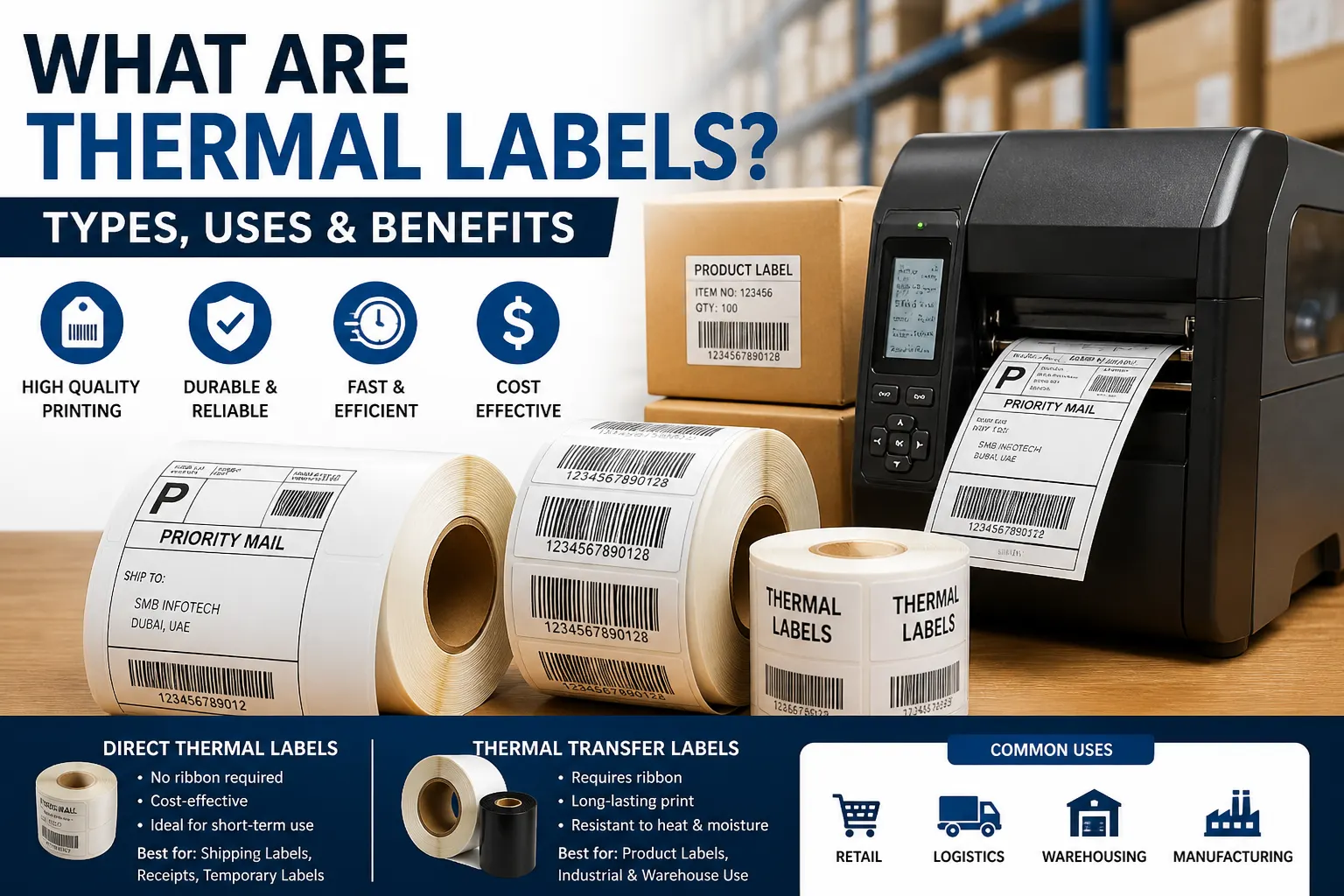
Different Types of Label MaterialsThermal labels are widely used in retail, logistics, warehouses, and manufacturing industries for barcode printing and product identification. These labels are designed to work with thermal printers and do not require traditional ink or toner.
Understanding thermal labels helps businesses choose the right labeling solution for accurate printing and efficient operations.
How Thermal Label Printing Works
These are special labels that use heat to create images or text on the label surface. Instead of ink, thermal printers use heat-sensitive material to produce prints.
These labels are commonly used for:
- Barcode labels
- Shipping labels
- Product labeling
- Inventory tracking
Different Types of Label Materials
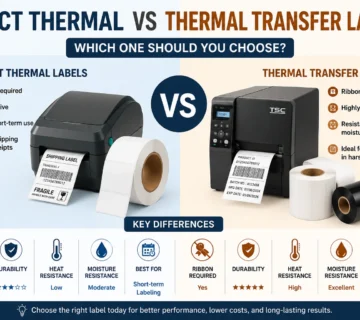
Direct Thermal Labels
These are use heat-sensitive paper and do not require ribbons.
Features:
- No ink or ribbon required
- Cost-effective
- Suitable for short-term use
Best for:
- Shipping labels
- Receipts
- Temporary barcode labels
Thermal Transfer Labels
It requires a ribbon to print.
Features:
- Long-lasting print
- Resistant to heat and moisture
- High durability
Best for:
- Product labels
- Warehouse labeling
- Industrial applications
Choosing the right ribbon is important, so understanding barcode ribbon types helps improve print quality.
Uses of Thermal Labels
They are used across multiple industries:
Retail
- Price labels
- Product barcodes
Logistics
- Shipping labels
- Tracking labels
Warehousing
- Inventory labels
- Pallet identification
Manufacturing
- Asset tracking
- Product identification
Many businesses also use barcode stickers for product labeling and pricing.
Key Benefits of Thermal Printing
Cost-Effective
No need for ink or toner in direct thermal printing.
Fast Printing
Thermal printers offer high-speed label printing.
High Accuracy
Ensures clear barcode scanning.
Low Maintenance
Thermal printers require less maintenance compared to traditional printers.
How to Choose the Right Thermal Labels
Usage Duration
Short-term → Direct thermal
Long-term → Thermal transfer
Environment
Outdoor or harsh conditions require durable labels.
Printer Compatibility
Ensure labels match your printer type.
Using proper barcode printing techniques ensures better label quality and scanning accuracy.
FAQs – Frequently Asked Questions
Q1. What are thermal labels used for?
Ans – Thermal barcode labels are commonly used for shipping, product identification, and inventory tracking across different industries.
Q2. What is the difference between direct thermal and thermal transfer labels?
Ans – Direct thermal labels print without a ribbon and are ideal for short-term use, while thermal transfer labels use a ribbon and offer more durability.
Q3. Are these labels durable?
Ans – Thermal transfer labels are highly durable and resistant to heat and moisture, while direct thermal labels are suitable for temporary applications.
Q4. Do these labels require ink?
Ans – No, this labeling method uses heat instead of ink or toner to create prints.
Q5. Which industries use this type of labeling?
Ans – Retail, logistics, warehousing, and manufacturing industries widely use this labeling solution for tracking and identification.
Conclusion
The labels are an essential part of modern labeling and barcode printing systems. Choosing the right type of thermal label helps improve efficiency, reduce costs, and ensure accurate scanning.
SMB Infotech provides high-quality labeling solutions including thermal labels for businesses across various industries.