Thermal labels are the labels behind nearly every barcode you scan in a shop, warehouse or courier depot. They are printed on demand, need no ink, and are what makes real-time stock control practical rather than theoretical.
This guide explains how they improve inventory accuracy, the difference between thermal labels and thermal rolls, and how to choose the right type for UAE conditions.
What Thermal Labels Are
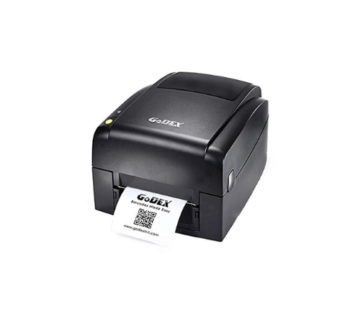
A thermal printer creates an image using heat rather than ink or toner. There are no cartridges to replace, no drying time and no smudging from wet ink. Labels print one at a time, on demand, at the moment you need them.
That last point is what makes them valuable for inventory work. A label printed at the moment stock is received carries the correct date, batch and price, rather than whatever was true when a bulk order of pre-printed labels was placed three months earlier.
Direct Thermal and Thermal Transfer, Briefly
There are two thermal printing methods and choosing the wrong one is the most common and most expensive labelling mistake.
- Direct thermal uses heat-sensitive label stock and no ribbon. Cheaper and simpler, but the image fades with heat, light and time. Right for shipping labels, receipts and anything with a short life.
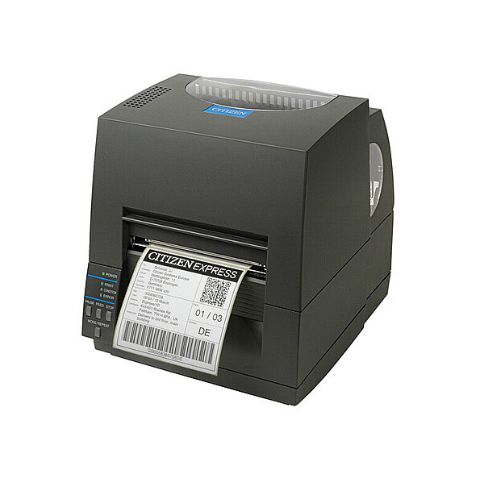
- Thermal transfer uses a ribbon to fuse the image into the label. Costs more per label, lasts far longer. Right for stock that sits on a shelf, asset tags and anything exposed to heat or sunlight.
The short version for UAE businesses is that direct thermal suits labels measured in days and thermal transfer suits labels measured in months or years. We cover the full comparison in a separate guide if you want to go deeper before deciding.
How Thermal Labels Improve Inventory Accuracy
They remove manual entry
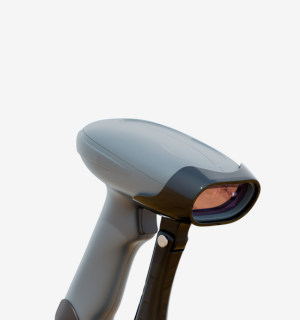
A scanned barcode is read correctly essentially every time. Typed entry is not. Removing keystrokes from stock movements removes the largest single source of inventory error.
They make stock visible in real time
When every item and location is labelled, the system knows what you hold and where it sits without waiting for a manual count. Reorder decisions stop being guesswork.
They make cycle counting practical
Counting a section with a scanner takes a fraction of the time a manual count does, which means it happens often enough to be useful rather than once a year as an audit exercise.
They support traceability
Batch numbers, expiry dates and serial numbers printed at the point of receipt let you trace a specific item back through your supply chain. For food, pharmaceutical and electronics distribution in the UAE this is frequently a compliance requirement rather than a convenience.
They cut dispatch errors
Scanning at pack and dispatch catches the wrong item before it leaves the building, which is considerably cheaper than processing a return.
Thermal Rolls and Where They Fit
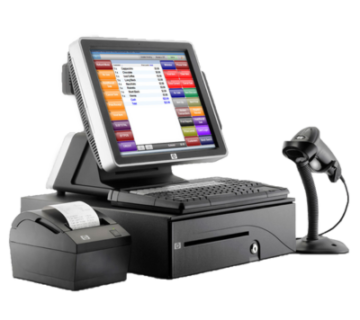
Thermal rolls are continuous paper rolls without die-cut labels, used mainly in receipt printers, POS terminals, kitchen printers and queue systems. They are direct thermal by design and carry no adhesive.
They matter to inventory work because the point of sale is where stock leaves your system. A receipt printer that jams or produces faded output interrupts that record. Points worth watching:
- Match the roll width and diameter to your printer. Close is not close enough; a roll a few millimetres too wide will jam.
- Check the coating quality. Cheap rolls produce faint print and leave residue that wears the printhead faster.
- Store rolls sealed and away from heat. UAE storerooms regularly exceed the temperature at which thermal paper starts to darken on its own.
- Consider BPA-free stock where receipts are handled all day by staff.
UAE Conditions Change the Calculation
Heat is the defining factor. Thermal paper reacts to heat by design, which is exactly the problem when ambient temperatures are high.
- Direct thermal labels left in a hot warehouse or a vehicle can darken across the whole surface and become unreadable, with no warning that it is happening.
- Humidity weakens some adhesives, particularly on cartons stored near loading bays.
- Sunlight through a bay door will fade direct thermal print faster than most people expect.
- Cold store operations need adhesives rated for freezer application, since standard adhesive will not bond at low temperature.
The practical conclusion is that a label specification copied from a European or North American operation will often underperform here. Anything with a life beyond a few days should be thermal transfer, and long-life or outdoor applications should use synthetic stock with a resin ribbon.
Choosing the Right Thermal Label
- Decide how long the label must stay readable. Days, months or years.
- Identify the surface it goes on. Carton, plastic tote, metal, curved or flat.
- Assess the environment. Ambient, hot storage, outdoor, freezer or chemical exposure.
- Choose the method. Direct thermal for short life, thermal transfer for everything else.
- Choose the material. Paper for general use, polypropylene or polyester where durability matters.
- Match the ribbon. Wax for paper, wax-resin for mixed use, resin for synthetics.
- Confirm the size fits your printer and your application, then test a sample roll before ordering in bulk.
Common Problems and How to Avoid Them
Labels fade over time
Direct thermal used where thermal transfer was needed. Switch method for anything with a life beyond a few days.
Print rubs off
Ribbon mismatched to material. A wax ribbon will not bond to a synthetic label; use resin.
Labels peel off cartons
Adhesive not suited to the surface or the temperature. Dusty and recycled carton surfaces need a more aggressive adhesive than smooth stock.
Barcodes will not scan
Usually print darkness set too low, print speed too high, or a dirty printhead. Clean the head, slow the print slightly and raise the darkness a step at a time.
Printer skips labels
The media sensor needs calibrating, or the sensor type is set for gap when the labels are black mark. Recalibrate after every media change.
Working With a Thermal Label Supplier in UAE
The value of a good supplier is in the specification rather than the price per roll. Labels matched to your printer, ribbons matched to your material, consistent stock so you are not recalibrating every delivery, and availability so a run does not stop because a size is out of stock.
SMB Infotech supplies thermal labels, thermal rolls and ribbons across Dubai and the UAE, in paper and synthetic materials and in standard or custom sizes. We also supply and service the printers, which means we can match the consumable to the machine rather than guessing.
Tell us what you are labelling, where it will be stored and how long it needs to last, and we will send samples to test before you commit to a quantity.
Frequently Asked Questions
What is the difference between thermal labels and thermal rolls?
Thermal labels are die-cut, carry adhesive and are used for barcoding and product identification. Thermal rolls are continuous paper without adhesive, used mainly in receipt and POS printers.
How long do thermal labels last in UAE conditions?
Direct thermal labels can begin fading within months in heat and light. Thermal transfer labels on synthetic stock with a resin ribbon can remain readable for several years.
Do thermal printers need ink?
Direct thermal printers need no ink or ribbon at all. Thermal transfer printers need a ribbon but no ink cartridge.
Why are my thermal labels turning black?
The stock has been exposed to heat. Direct thermal paper darkens on its own above a certain temperature, so store rolls sealed and away from heat sources and direct sunlight.